Showing posts with label Limerick. Show all posts

Friday, 8 June 2018


If you have the M C 4 R gene
When you grow you'll be fat and not lean
A drug li_rag_glu_tide
Your excess weight will hide
And you'll eat much less food as a teen

 
The Melanocortin 4 Receptor (MC4R) is a key regulator of body weight. People with genetic mutations tend to gain weight from early childhood. The main clinical feature in MC4R deficiency is hyperphagia (an increased drive to eat) as well as impaired satiety (not feeling full after a meal).

Monday, 28 May 2018

Bonobo Midwives


They have noticed the bonobo's girth
And they know what a friendship is worth
So the midwives come round
Good advice they expound
And they help, with great care, at the birth

 
My research means I am always interested in the social life of animals and how it relates to how our own species behaves.  This week's limerick is based on the behaviour of bonobos when one of them is giving birth. Birth is clearly a social event where female attendants provide protection and support for the mother-to-be, including manual gestures directed at holding the infant as it is born.
 
I was alerted to this in an article in this week's New Scientist based on the paper "Is birth attendance a uniquely human feature? New evidence suggests that Bonobo females protect and support the parturient" by Elisa Demumu et al in Evolution & Human Behaviour.

Monday, 21 May 2018

Tides will get bigger over the next 10 million years


This week's New Scientist has an article "Tides will rise for the next million years" and I was moved to write another science-oriented limerick.

The Altantic's three thousand miles wide
And America westward will slide
And I have to divulge
That the size of the bulge
Will result in a much higher tide.

Several very different things are involved.

The science of continental drift tells us that the North Atlantic is getting wider by just over a centimetre a year.
The tides are caused as a result of the gravitational pull of the moon. This means that the part of the sea nearest to the moon is attracted by the moon to form a bulge. One the other side of the Earth the Earth is pulled away from sea, creating a matching bulge.

Because the Earth rotates the bulges move round the world once a day, causing the tides. This bulge can be considered to be a wave moving across the Atlantic and it has a particular wave length.

Resonance then comes into play - rather like a huge musical instrument whene the there is a relationship between the wavelength of the note and the length of the string or pipe generating the sound. The tidle bulge has a wave length and the size of the tides (equivalent to the loudness of the note) depends on the size of the boxslowly gets wider tha amplicifcation of the tides due to resonance will get bigger. However when the Atlantic gets even wider the resonance will decrease and the height of the tide will fall.

Monday, 9 April 2018

Bats, Insects and Climate Change

 
Say thanks to the small free-tailed bat
Who consumes both the earworm and gnat
But the climate is warming
Too soon they are swarming
And the crops in the fields will fall flat
 
 
The Scientific American has an article "Bats are migrating earlier, and it could wreck havoc on Farming" which relates to the way climate change is affecting the Mexican free-tailed bats that migrate to Bracken Cave, Texas, in vast numbers, and which eat many of the insects which are agricultural pests.
 
Bats are not so significant in the UK, and an article in a Devon newspaper, The Moorlander, this week, reminds me that my interest in bats dating back about 60 years. The Devon Greater Horseshoe Project is conducting a survey this summer using bat detectors to count bats as they hunt for insects. About 60 years ago I spent time actively recording and ringing hibernating Greater Horseshoe Bats in Devon - for the pioneer bat ringer, John Hooper, One of my activities involved checking some of the smaller caves and mines in the area between Buckfastleigh and Chudleigh. While I no longer live in Devon, I do visit occasionally and will be most interested to see the results of the survey.

Saturday, 24 March 2018

Man's contribution to life on the planet???

https://www.facebook.com/africartoons/photos/a.422005447826726.120255.144565378904069/2099393046754616/?type=3&theater
Afrocartoons

In the past, coming from the abyss.
There emerged, on four legs, a small fish.
Then came ape, and then man,
Plastic pot, and tin can,
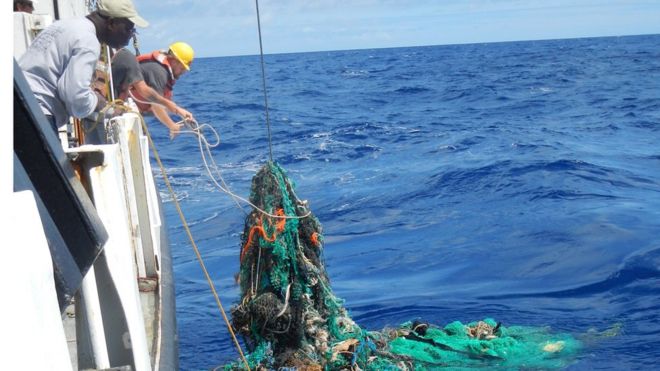
And then piles, and more piles of rubbish.

See also
Plastic patch in Pacific Ocean growing rapidly, study shows
  • 22 March 2018
Discarded fishing net in the PacificImage copyright The Ocean Cleanup
Image caption Discarded fishing nets were part of the haul
A collection of plastic afloat in the Pacific Ocean is growing rapidly, according to a new scientific estimate.

Sunday, 2 April 2017

My Limericks aren't as dead as a dodo

The poor Dodos extinct so goodbye
For of course the poor birds couldn’t fly
And the men in their boats
Preferred fresh meat to oats
All that’s left are some bones, very dry

A recent email has reminded me that a year or so ago I regularly posted a limerick illustrating a scientific topic - in part because it encouraged me to think outside the box.

Tuesday, 22 March 2016

Environmental Limerick: Tasmanian Wilderness areas saved

The Threat!
From Tasmania I like the news
For its wildness has such great views
And will not now be felled
For the plans have been shelved
As the wild life they cannot abuse.


The Tasmanian Wilderness covers about a fifth of the island and is one of the world's last big temperate forests. The BBC news has reported that owing to protests from Unesco the plans to open the area up to logging have been abandoned,
My interest is that in 1991 I was working on a short term contract with CSIRO in Sydney and was asked to help set up a data base on a small area of the Tasmanian forest to demonstrate to Australian Heritage the advantage of digitising their records. Unfortunately it was considered unnecessary for me to actually visit the area I was documenting as I was "only a computer  expert." However in my own time I visited the Tasmanian section of the Botanical Gardens at Canberra and stopped off for a short time on the edge of the Great Otway National Park in Victoria, which is about the biggest bit of surviving temperate rain forest in mainland Australia. Should I ever have the chance to visit Australia again I would love to visit parts of the Tasmanian wilderness.

Sunday, 20 March 2016

Environmental Limerick: The Warmest Febuary worldwide ever


Source ecosmart
Firm action should not be delayed.
We are warming too much centigrade.
With so much CO2
There's a lot we must do
Or in future the price must be paid.

Following a NASA report the papers world wide have been full of the news that February was a real shocker - see for example The Guardian (UK), New Zealand Herald, USA Today, The Indian Express, etc.

So have you made sure your political representative knows your views and is actually doing something positive about it?

Why Dartington was Different - No need for Sexting ....

Some people may think it was lewd
That as children we bathed in the nude
But at Dartington Hall
No one worried at all
About fashions we choose to exclude

An article recently appeared on the Dartington Hall School pages which had been written in French 'Life in the Sun' by a young English woman attached to UNESCO and a member of the 'Sun Club'. She recalls her life in a progressive school in England, where there is no equivalent in France.

Tuesday, 8 March 2016

Environmental Limerick: Methane Gas in Siberia

In the permafrost ground is a crater,
Methane gas is the sole excavator.
As the temperature rises
There'll be more surprises
As threats to the climate gets greater.


Permafrost is found widely within on high latitudes in places like Siberia - the term indication that the ground is permanently frozen. In many areas the ground contains large quantities of methane, in the form a solid methane hydrate. If the climate warms the ground starts to thaw and the methane hydrate breaks up, releasing methane gas in the process. As methane is a much more powerful greenhouse gas than carbon dioxide the effect could be to accelerate global warming and the fact that temperatures are rising in the arctic is a cause for concern.

The above picture shows a crater, photographed shortly after it formed in 2014, situated on the Yamal Peninsula of Northern Siberia. Subsequently more craters have been discovered. What is happening is that as the ground warms (but is still frozen) the methane hydrate decomposes and releases methane gas which cannot immediately escape. The pressure increases until it reaches a point where it causes an explosive outburst - producing a large crater.

Sunday, 21 February 2016

Peace in our time - Not with BRexit.


Tory Prime Minister Neville Chamberlain holds high a worthless piece of paper in 1938
So we vote for a simple sound byte.
Is it Yes? Is it No? Which is right?
For our future depends
On electoral trends.
Should we leave? For we need to unite?

 At a global level we face some very serious problems. We appear to be on the brink of a very nasty religiously inspired war, where already large numbers of refuges are flooding into Europe and nowhere in the world is safe from the human bombs and guerrilla tactics of the enemy. Recent banking history also suggests that the world currency markets are not that stable and an economic crash could come at any time. In addition we have had month after month when the world’s average temperature has broken all previous records and there can be no doubt that climatic changes and rising sea levels will have major long term consequences for future generations. What history teaches us, is that when a society faces serious challenges there is a real danger that it disintegrates into warring factions who put short term self-interest before the long term collective interests.

Wednesday, 17 February 2016

Environmental Limerick: The Albatross

I admire the old man albatross
For he knows that his wife is the boss
So he waits on the nest
As she flies East and West
To catch fish 'neath the old Southern Cross

Albatross nesting on the Falkland Islands
A Barry Mead Photograph

Tuesday, 16 February 2016

Could a Humanities approach to the Environmental Crisis work?

Are we clever – or is it just vanity?
Things are changing – we need more humanity.
If the sea levels rise,
It is nature that dies,
We must act - or the future's insanity.

I have just completed the FutureLearn course “Environmental Humanities – Remaking Nature” run by the University of New South Wales. This looks at the way in which the Humanities can temper the scientific and technological approach to the problem. The course highlighted the weaknesses in an overtly anthropocentric approach which looks for sophisticated technological solutions (which will probably not succeed) and which ignores the fact that we are part of the natural world.

To me the most important part of the course related to helping people to understand what is happening by using various storytelling techniques – which is why this post starts with a limerick. The course, coupled with ideas from other FutureLearn courses, also influenced my new mission statement, and the new approach taken in presenting posts on this blog.

Friday, 12 February 2016

So what are Gravity Waves


Two black holes, when they met, cause a cavity
In the space time contin’um called gravity
And the waves, fast as light,
Prove that Einstein was right,
As the scientists claim, with audacity.

The science involves much complicated mathematics but a simple model will explain the basic idea.

Wednesday, 3 February 2016

Environmental Limericks

On the FutureLearn site there's a course
(New South Wales is a source I endorse)
It's environmental
With  humanities (gentle)
Put over with plenty of force.

I  have recently been doing a number of FutureLearn courses, as they encourage me to think outside the box and the current one is on Environmental Humanities, put on by the University of New South Wales. As scientist with little formal training in the humanities I have found the discussion so far interesting- and the comments between the students on the course stimulating.

We are all trapped on a planet where the climate is changing and part of the course involved students suggesting a task area and relating it to the discussions. I though about how, through this blog, I could introduce more environmental posts to alert people of the issues by linking simple poetry to a topic - by resurrecting my limerick posts - although I do not promise one a week, which was the original idea.

Thursday, 27 November 2014

Wednesday Science Limerick: Resources are running out

Fresh Water’s a vital resource
So you take all you’re needing, of course.
So your neighbour has none
So he takes up his gun
And the shortfall is resolved by force.
An Opinion Article in the New Scientist by Petros Sekeris starts with the paragraph
THERE is a growing feeling that resources vital to sustain human life, such as fresh water, land and fossil fuels, are being used too fast to ensure our long-term presence on the planet. It seems obvious that nations should cooperate on this problem, and yet successful cross-border solutions and agreements are hard to find. Why don't we act for the common good more often?
The  problem of water shortages due to over-exploitation are well known  - just Google "water shortages" to fing examples from all over the world. There are of course other shortages - food is an obvious one which will be exacerbated by climate changes - which could also reduce the effective living space due to sea level rises - or increased temperatures in an around some dessert areas.
 
Some raw materials have very uneven distribution around the world - with it being high on the list, but some rare materials, essential in some modern electrical devices, are in short supply and only available in a small number of countries.
 
Petros has been using gaming models to explore what happens when two societies both want a scarce resource, using model which can involve violence. This model suggests that as supplies start to become short the "safe" solution - that both sides work together to optimise the resource - is unlikely to happen. Hoarding what you can grab is a more likely strategy - ending up in violence.

Wednesday, 19 November 2014

Wednesday Science Limerick: The Speed of Light

If you measure the speed of the light
From a source, whether feeble or bright,
Whether photon or wave,
Out in space, in a cave,
It’s the same, be it morning or night.


However you measure it, the speed of light in a vacuum is exactly 299,792,458 metres per second. It doesn’t make any difference if you think of light as a string of particles called photons, or as a wave.

Friday, 7 November 2014

Limericks & An Interruption to Normal Services

The dove saw the hawk as a threat
But its plans to escape were upset
When a window it hit
So I wrote this obit
And the hawk ate a feathered bagette

This morning I was interrupted by a large thump on our sitting room window, and I realized at once that a bird must have flown into it at speed. However I wasn't the first to get to the Collared Dove ...which had almost certainly flown into the window trying to escape from the Sparrow Hawk!

However this is a good opportunity to explain why I missed this week's Wednesday Limerick and why posts of all kinds may be a bit erratic at least until Christmas.

I am not expecting to go as dramatically as the collared dove but my wife and I have reached an age where parts are beginning to wear out and we need to think about our future living requirements. These will almost certainly include a ground floor bedroom with en-suite facilities. We prefer to remain in the small town where we have lived for the last 50 years and having looked at property availability the most sensible option would be to convert our integral garage to provide the extra space we need. However the garage is currently full almost to the roof with junk accumulated over the years - so we have set ourselves the target of downsizing the clutter ...

Thursday, 30 October 2014

Wednesday Science Limerick: Computers and Cosmic Rays

A transistor is just a fast switch
A computer has millions and which
If they fail to work right
Your plans they will blight
But the experts just say "It’s a glitch."


The very first computers used large valves as electrical switches and these often failed. The coming of the first transistors greatly improved reliability, and integrated circuits involving millions of transistors on a single chip has reduced that possibility of a single transistor failing when being used to almost nothing.

But not entirely. Individual transistors in an integrated chip are now so small that they can be affected by alpha-particles caused by radioactive decay in other components - and by the even more energetic cosmic rays - which becomes important in computers which are to be sent into space.

Where appropriate self-checking and redundant circuits can be used to minimise the possibility of the system becoming non-functional. 

If you are interested in the technical side you can find a detailed history and explanation at How Cosmic Rays cause Computer Downtime (pdf).

However for the average users with a pc, laptop or android system, 99.99% percent of gitches are going to be due to software bugs, malicious viruses, or good old human error.

Wednesday, 22 October 2014

Wednesday Science Limerick: Comet Siding Spring

The comet was named Siding Spring
It came as if thrown from a sling
From the distant Oort cloud
Passing Mars as it ploughed
Round the Sun, then it left with a swing.


The Comet Siding Spring, which originated in the Oort Cloud, passed close to Mars on 19th October and while it was photographed from the Mars Opportunity Rover and Mars Renaissance Orbiter (above) we will probably have to wait for the most interesting findings until a conference to be held in December. In the mean time the best places to find the latest news is on Wikipedia under the comet's official name C/2013 A1.