Evoanth has posted The Evolution of Infertility in Humans suggesting that in evolutionary terms successful reproduction is more important than maximising the enjoyment of sex. I commented:
It clearly helps, in evolutionary terms, to have a loyal supportive male to help rear his children - so the priority must be pair bonding and not "sex is fun." Make sex too much fun for the male and he may put fun with new partners above loyalty - which means less support for his children - and more venereal disease. If all males do it all the time the overall effect is less stability for the children, more venereal disease and definitely no advantage for the female genes.
If a few males spread their oats widely there could be a statistical advantage to them - but if a female is in a more or less stable relation with a male who has just enough sexual capability to keep her pregnant he will still be the father of most of her children - even if a randy male gets in a poke or two.
Overall the balance could be that overall breeding success is highest with stable couples, supported by grandmothers, than , for example, a harem system where the male spends much of his energy defending his status rather than directly supporting his children - and where it pays any usurper to kill the harem's youngsters because he is not the father.
What I could have added is that team-work between males in small hunter-gather groups could also increase the survival chances of the group - and the genes of the individuals - and good team-work means trust - with minimum energy being expended in rivalry.

Showing posts with label Evolution. Show all posts
Showing posts with label Evolution. Show all posts
Wednesday, 29 July 2015


Sunday, 5 October 2014
How Humans invented Natural Language and why Animals don’t have it
Each species will balanced the use of resources between activities
such as feeding, breeding, avoiding predators, and learning how to optimise these resources by using the brain. There are many different evolutionary strategies.
For instance some fish lay millions of eggs while humans have small numbers of
young and use their brain to maximise the survival of each youngster. However
we can be certain that no animal evolves an organ bigger than it needs, and if
conditions change an organ will shrink if it is bigger than necessary. This will
apply to every organ and function and no species will not evolve a brain bigger
than it needs.
Saturday, 9 August 2014
The Brain and the Evolution of Human Intelligence (Comments Please)
I am currently drafting a paper on the Evolution of Human Intelligence which will bring together three interacting models, each representing different levels of activity and abstraction. The jumping off model I am calling the “Brainwave Model” which looks at simple decisions at the human short term memory level. Above this is an “Intelligent Pattern Recognition Model” which examines the relevant CODIL research and its relevance to culture, natural language and intelligence – and in effect defined the brain’s “Symbolic Language”. Below the Brainwave Model” there is the “Ideal Brain Model” (early draft to be rewritten) which looks at what the neurons need to be able to do in order to support the two higher models. The paper will continue looking at the evolution of the brain and human intelligence, using the models as a guide, starting with the requirements of a simple animal and looking at how the brain’s power increases as culture evolves.
Draft Section: The "Brainwave Model
The Brainwave Model forms a short term memory bridge which links
the complex high level mental activities which we associate with human
intelligence, with electrical and chemical activities at the neuron level, and
the objects in the real world we are thinking about. It is best described by a simple example.
Imagine the brain as a sea of interconnected neurons and
into this sea we drop pebbles of information. This creates ripples of activity
which spread out across the sea, and eventually die away. For instance our eyes
see a rabbit and result in a “rabbit” ripple becoming active. This process
could well involve many hundreds or thousands of neurons becoming active as the
ripple develops and this activity can only pass between neurons which are
linked. Each ripple can be considered as an active thought in the short term
memory and at this level of modelling we are not interested in the fine detail
within a wave of activity.
At the same time the body becomes hungry and a “food”
ripple becomes active. The two ripples spread and meet and combine to generate
a new brainwave – “rabbit pie”. At the point at which they coalesce
there will be a neuron which is linked in such a way that it can be activated
by either the “rabbit”,
the “food”
or “rabbit
pie” ripples. What has happened at the thought/concept level could
be represented as:
rabbit, food à rabbit pie
We can generalize this to model
the human short term memory. At any one time there are a maximum number of
ripples (about seven) which can be active at any one time. Each ripple can be given
a concept name, which for convenience in this text will be shown in bold brown
font. Where two or more ripples intersect there will be a neuron (or a group of
neurons) which can be activated by the relevant concept and this can “take a
decision” by activating a new ripple.
Of course it is important to realise
that a concept name, such as rabbit, is not a precisely defined entity as
the ripple through the neurons would be different depending on the colour of
the rabbit, or whether it was a real rabbit or a rabbit in a children’s story
book. It may well be that in some situations the sight of a wild rabbit, or a
carcase in a butcher’s shop will trigger the rabbit pie decision, while the
sight of a domesticated rabbit, or a picture of Beatrix Potter’s Peter Rabbit
will not. At the same time the strength of the food concept will vary depending
on how hungry you are. Other minor factors might affect whether you imagine the
pie to be topped with short crust or puff pastry – or whether instead you think
of rabbit
stew. Such differences are an essential features of how the brain
works.
The brain is a dynamic learning
(and forgetting) system which is not concerned with any externally defined
global models. In a relation such as
rabbit, food à rabbit pie
the “meaning” of rabbit
is defined only by the ripples active at the time the rabbit pie decision is made. As
part of the brain’s learning process the mental activity involved will have a
feedback effect which could modify the way the activated neurons are linked –
so the meaning of rabbit could be slightly different the next
time a similar rabbit is seen in a similar situation.
When we come to the exchange of
information between people using natural language we need to agree stable long
term concept names for objects, such as rabbits, but our individual brains will
associate the concept rabbit with different memories which will
develop over time. Later in the paper, when I look at CODIL as a model of brain
activity, the same situation arises. CODIL was conceived as a practical working
tool which did what its human user wanted – and by default items (the
equivalent of concepts) have to be stable – although options were built in to
allow CODIL to dynamically alter its behaviour over time.
Before moving on to discuss higher
level models of brain activities it is necessary to understand how this simple
brainwave model provides a basis for further research. The brain contains
billions of neurons, and each neuron has direct (and indirect) links to many
other neurons. This would represent a massive array involving tremendous
computer power if one tried to look at the problem globally. The wave of
activity associated with the current thoughts (concepts) in our short term
memory act as an filter on the vast array selecting a minute number of entries –
and in some cases none at all. When considering how the brain processes higher
level “intelligent” ideas all neurons and links can be ignored apart from the
tiny number which are activated in the current context.
Tuesday, 5 August 2014
Why you should stop believing in Evolution

The Week as an excellent article entitled Why you should stop believing in Evolution which I really enjoyed. And so will you.
It points out that evolution is like gravity or the fact that the world is round - it is out there and it is just an essential part of nature. Really the only question is whether you understand it or you don't.
Tuesday, 1 July 2014
Is Language the key to understanding human intelligence?
 In my previous post I referred to
a paper with a title that ended with the words “Modern Human SuperiorityComplex” and these words were at the back of my mind in reading the book “Louder than Words” by Benjamin Bergan. I am currently drafting a paper on my
evolutionary approach to a symbolic language to explain how the brain processes
information and I decided to read this book to help me clarify where my ideas
fit with recent cognitive science research and where there are discordances which I need to address in my paper.
In my previous post I referred to
a paper with a title that ended with the words “Modern Human SuperiorityComplex” and these words were at the back of my mind in reading the book “Louder than Words” by Benjamin Bergan. I am currently drafting a paper on my
evolutionary approach to a symbolic language to explain how the brain processes
information and I decided to read this book to help me clarify where my ideas
fit with recent cognitive science research and where there are discordances which I need to address in my paper.Saturday, 28 June 2014
Some thoughts on the Difference between Neanderthals and Modern Humans
The recent paper Neandertal
Demise: An Archaeological Analysis of the Modern Human Superiority Complex
by Paola Villa and Wil Roebroeks reviews the archaeological literature and
suggests that the evidence that the Neanderthals died out because they were in
some way inferior to modern humans is weak. I wouldn’t claim to be any kind of
expert in the assessment of the archaeology but I suspect there will be quite a
lot of criticism from people who are sure we are superior.
Wednesday, 18 June 2014
When did language Evolve
Adam Benton recently posted "When did Language evolve" on his blog Evoanth which looks at the latest information about the evolution of the hyoid bone, which is linked to the tongue and other muscles which are involved in speech.
Clearly there is a relationship between our ability to vocalise and our use of language - but a key question is what came first. Did early humans use imitation animal calls to help in hunting and then use a feature that already existed to communicate - or did our vocal tract evolve because we were already using a simple language and a clearer voice make things better. If we think of it in terms of information flow one thing seems obvious - our ability to makes a wide range of sounds, with clicks, whistles and a wide frequency range is far more than is needed to support our natural language. In the animal kingdom a number of birds, such as the Myna bird,are very good at imitating the sounds it hears - and also has the Fox2 gene supposed to be responsible.
However my own feeling is that natural language is almost entirely due to cultural evolution and I posted the following comment to Adam's post.
Clearly there is a relationship between our ability to vocalise and our use of language - but a key question is what came first. Did early humans use imitation animal calls to help in hunting and then use a feature that already existed to communicate - or did our vocal tract evolve because we were already using a simple language and a clearer voice make things better. If we think of it in terms of information flow one thing seems obvious - our ability to makes a wide range of sounds, with clicks, whistles and a wide frequency range is far more than is needed to support our natural language. In the animal kingdom a number of birds, such as the Myna bird,are very good at imitating the sounds it hears - and also has the Fox2 gene supposed to be responsible.
However my own feeling is that natural language is almost entirely due to cultural evolution and I posted the following comment to Adam's post.
Wednesday, 4 September 2013
Evolution of the Human Brain
Chiltern Humanist MeetingEvolution of the Human Brain
The first of our autumn series of meetings will be held on Tuesday 10 September at Wendover Library.
Chris Reynolds, a retired scientist who has been a member of our group for several years, will take a new look at the evolution of the human brain. This has been researched at a biological level and raises the question of whether there is an inbuilt reason why some people are drawn to religion whilst others are not.
By temperament Chris likes to stand back and get an overview, rather than getting stuck in a narrow specialist area. After taking a doctorate in Chemistry he started working with computers in 1965; he was soon involved in research, and developed a language called CODIL over the following years. As Reader in Computer Science at Brunel University, Uxbridge during the 1970’s, he became involved in a project, funded by the British Library, concerned with interactive publication, which in a very elementary way anticipated the World Wide Web. Later he edited an online professional book review service on the subject of Human-Computer Interaction. In retirement his main interests are genealogy and local history.
His talk promises to be an interesting and different take on evolution.
Humans like to think they are something special - If not actually made by God in his own image, or the centre of the universe, are least we can console ourselves that we are more intelligent than the other animals that inhabit our planet.
Or can we? No animal needs a brain that is bigger than necessary to survive, and we only have to look at the other mammals that share this planet to see that there are many cases where a species can be characterized by a greatly enlarged organ, whether it is a giraffe with its long neck, an elephant with its greatly extended nose, or the hands of the bat. And what about the changes we see in the whales!
This talk assumes that all mammals have brains that use the same neural code, and that the human brain is no more than a normal animal brain which has been supercharged to give it more processing capacity. It considers the limitations one might expect from a very simple neural code, and asks what the evolutionary pressures would be on the braians of hominids who were faced with the drying out of the African rain forests three million years ago.
The key factor would seem to be the point where cultural knowledge passed between the generations became more important to survival than the basic brain mechanisms on their own. At this point it there was an advantage in have a larger brain and developing faster mechanisms for learning. Better learning means better tools for survival, and one of those tools is language, which will automatically develop from generation to generation. One could get an auto-catalytic situation where the culture we pass on is augmented at a growing rate in each successive generation.
Unfortunately the basic animal neural code is mathematically not very sophisticated, and while this is not important to other animals the defects become more evident as the human species pushes the code to its limits. While many of the defects can be avoided using language the logical weaknesses, such as confirmation bias, can, and are, exploited by religions and political belief systems. Even scientists will not be immune, as they take part in the rat race for prestige and funds!
After the talk I will be posting the slides used and background notes on this blog..
Thursday, 23 May 2013
Did the Neanderthals die out because humans had a better culture?
Two recent news items,
coupled with earlier reports that Neanderthal children matured faster
than human children, could be relevant to Neanderthal intelligence
and perhaps to the species becoming extinct.
The paper New
insights into differences in brain organization between Neanderthals
and anatomically modern humans
by Eiluned Pearce, Chris Stringer and R. I.
M. Dunbar notes that while the Neanderthal brain size was similar to
Homo sapiens, more of the brain was devoted to sight and
controlling a larger body.
The paper Barium
distributions in teeth reveal early-life dietary transitions in
primates by Christine Austin et al examined a
Neanderthal tooth as estimated that breast feeding in Neanderthals
may have only continued for about 14 months compared with 30 months
in human non-industrial societies.
Sunday, 12 May 2013
Human Evolution - Asian or African Origins and Family Trees
The
current New
Scientist contains an article Our
Asian Origins by Colin Barras which suggests that
our ancestors might have moved from Africa to Asian and then moved
back again and illustrates it with a modified classic human family tree – when evidence is rapidly accumulating that such
a view is over-simplistic.
 |
| A typical classic human family tree with no cousin links. From The Quest for Human Origins |
In order
to understand human evolution we need to get a grip on the mechanisms
– and to realise that we will never have more that a fraction of a
millionth of the information we would need to get a complete picture,
and the fragments of bones we find represent only some of the
environments our early ancestors lived, with some environments being
totally unrepresentative. Remains from different places with
different features and from different dates are given different
species names – but this does not automatically mean that the
living creatures could not have interbred, had it been possible for
them to meet.
Monday, 29 April 2013
Evolution and Alfred Russel Wallace
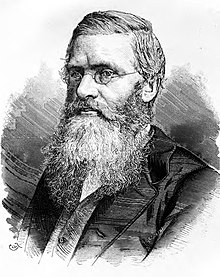 |
| Alfred Russel Wallace |
Last night I watched part 2 of Bill Bailey's Jungle Hero - a two part BBC TV series on the life of Alfred Russel Wallace - and immediately it finished I switched to the BBC Iplayer to watch part 1. If you are interested in the origins of the ideas behind evolution, and the difficulties of persuading the establishment to change its way of thinking I am sure you will find the programmes really interesting - as I did.
Friday, 26 April 2013
From the Neuron to Human Intelligence: Developing an “Ideal Brain” Model
I have just posted a discussion
paper: From the Neuron to Human Intelligence: Part 1:The “Ideal Brain” Model which will shortly be followed
by Part 2: Evolution and Learning. In these papers I propose a
model which suggests how the electrical activities of neurons in the
brain may be related, via evolutionary probable pathways to high
level activities such as language and intelligence. If the model is
even reasonably accurate it could have implications in many different
specialist areas where an understanding of how the brain works is
relevant.
It is clear that more research is
needed to establish the validity of the model and my problem is how
to go about both publishing and organising any further research,
especially as some of the ideas are counter-intuitive – which can
make communicating them difficult. If I was a young academic just
starting out on a research career and working in a supportive
university there would be some relatively obvious options. However I
am 75 years old, my only resource is a personal computer with access
to the internet, and I currently have no active contacts with any
major academic institution. As a scientist through and through I feel
the idea should be followed up, and as an old age pensioner I would
be happy to hand the matter over to a younger generation and enjoy
retirement.
Bearing in mind my limitations the
approach I have taken is to use this blog as the means of stimulating
discussion of the issues and disseminating information about the
research.
- The two papers have been kept comparatively short to make them more readable. If I tried to address every possible research issue that might be relevant it would take me far too long and the texts would become unreadable.
- Anyone who want to see more examples of how CODIL works, its applications, etc. can look at the many CODIL papers already online. In addition I have other reports (some only in draft form) and actual computer listing of other applications – and these can be posted online if appropriate.
- If anyone has difficulty in understanding any points, and/or has specific questions – I will be happy to answer them via this blog. In particular if you are doing some brain related research (in the widest sense) send me details (remembering I may have problems with pay walls) and I will happily give you my suggestions. After all a good test of my ideas is whether I can answer your questions convincingly.
- If there is enough interest I will try and make arrangements to make MicroCODIL software and manuals available to anyone who has access to a BBC Microcomputer. (Because the computer has become something of a cult survival second hand ones are often available.)
- Should I be able to help an existing university research project by giving a talk, attending a seminar, etc., I am happy to do so. Even if you don't agree with me exposure to controversial ideas can help everyone to start thinking outside the box.
- If a particular research group wanted to resurrect any of the CODIL programs and applications, or use them as a basis for an “ideal brain” simulation I would be happy to advise.
Monday, 8 April 2013
Looking for the "Neural Code"
Going through an older section of my email inbox I found a Scientific American link to John Hogan's blog post Do
Big New Brain Projects make sense when we don't even know the “Neural
Code” in which he wrote:
Neuroscientists have faith that the brain operates according to a “neural code,” rules or algorithms that transform physiological neural processes into perceptions, memories, emotions, decisions and other components of cognition. So far, however, the neural code remains elusive, to put it mildly
The neural code is often likened to the machine code that underpins the operating system of a digital computer. According to this analogy, neurons serve as switches, or transistors, absorbing and emitting electrochemical pulses, called action potentials or “spikes,” which resemble the basic units of information in digital computers.
I prepared the following, perhaps too lengthy, comment but when I came to post it I got a message that the page had been moved - and all attempts to find it resulted in irrelevant pages on the Scientific American web site. So I am posting my response below:
------------------------------
I would argue that the
problem with modern brain research is an inability to see the wood
for the trees. Of course if you look in detail at the brain things
get very complex. But such complexity is common in science. The key
idea underlying evolution is very simple – but when you look at
individual cases in detail there can be enormous complexity. The
same applied in medieval times when the movements of the known
heavenly bodies appeared to be very complex – until it was realised
that things became much simpler if you calculated the motions of the
planets using the sun, rather than the earth, as a key reference
point.
The problem with the
human brain is that, as John Hogan says, we don't know the “Neural
Code” and virtually everyone is looking at the problem in ever
greater detail – apparently on the assumption that the harder you
look at the fine detail the more certain you are to find out the
shape of the wood!
I have been trying to
stand back and get an overview and have come up with an “ideal
brain” model which in some ways parallels the “ideal gas” model
in physics. All neurons (like all gas molecules) are identical –
and the dynamic links between neurons are like the dynamic collisions
between gas particles. Using such a simple model it is possible to
“grow” a brain that can remember and use more and more complex
concepts – with the complexity of the most advanced concepts it can
handle depending of the brain's capacity and time for learning. The
model explains consciousness and can predict detailed observations
about the brain - for instance the so-called “mirror cells” in
the brain turn out to be nothing special as the observations simply
reflect the way that all neurons work in the “ideal brain”. In
addition it is possible to ask how human “intelligence” might
evolve and this approach predicts a major tipping point (rather than
some major genetic “improvement”) which produces and “explosion”
of “new ideas” when “cultural intelligence” becomes a more
effective tool than the innate biological “intelligence” of the
“ideal brain” model.
The problem with the
model, and possibly the reason why it appears not to have been
explored before is that to a “culturally matured” mind (and all
people accessing this text on the internet will be culturally
mature) the model involves several counter intuitive steps.
- The model assumes that at the genetic level the only significant difference in the processing mechanisms between our brains and most animals relates to supercharging effects (more capacity, more links, more effective blood supply, etc.), and that if there is a difference the model actually suggests a reason why we might be genetically less intelligent that some other animals! Before you shout me down over this “outrageous claim” I should point out that the model suggests why culturally supported intelligence is infinitely more effective than the genetic intelligence foundation on its own.
- You have to forget everything you have learnt about computers and algorithms. The definition of a stored program computer model requires there to be a pre-defined model of the task to be performed. The “ideal brain” model starts by knowing nothing about anything and has no idea what kinds of tasks it will be required to carry out. Virtually all it does is store and compare patterns without having any idea what those patterns represent. Once you start looking in great detail at how specific name tasks are processed you have taken your eye off the ball - as you are asking about what the brain can learn to do - and not what the underlying task independent mechanism is.
- Everyone knows there can't be a simple model of a Neural Code – because with so many people are looking someone would have found it if it existed - so there is no point in looking ...
- My research has “reject” stamped in all the standard “Winner of the Science Rat Race” boxes. I make no secret that I am 75, am not currently associated with any established research group, and the only facilities I have are a P.C. in a back bedroom, access to the internet, and access to some old research notes on a long abandoned blue sky project which was trying to design a human friendly white box computer to replace the standard human hostile black box computer everyone takes for granted.
If you are interested I
hope to have a detailed description of the “ideal brain” model on
my blog later this month.
Saturday, 30 March 2013
Evolution, Civilization and Pseudo-science – A Review of "Paleofantasy"
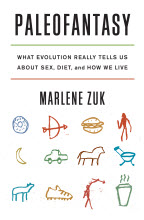 |
| Paleofantasy |
As
a young child, nearly 70 years ago, I purchased a beautifully
illustrated book “The Story of Living Things” and
have been hooked on science and evolution ever since. So when I Saw
Marlene Zuk's book “Paleofantasy - What Evolution really
tells us about sex, diet and how we live” I has hooked by
the subtitle – but puzzled by the short title. On reading the book
I realise I have missed out in life (particularly as it lived in the
United States) as I never read glossy lifestyle
magazines and was virtually unaware of the pseudo-science of caveman diets and
paleo-living surrounding the “back to the glorious past” brigade
which the book aims to address.
Having
got over the shock I found the book a very readable account of the
changes that the coming of agriculture and communal living have had
in evolutionary terms – including how the changes caused by the
selective breeding of our food species have converted what might be
considered unappetising wild species of fruit into their delicious
modern counterparts on the supermarket shelves. I was also very happy with the way it looked at the relationship between milk
products, human evolution and the digestion of lactose. On the
subject of exercise it discusses the fact that humans are naturally
good long-distance runners compared with many other animals and I
found the discussion of persistence hunting (where food animals are
chased till they become exhausted) extremely interesting. I can definitely recommend it for anyone with a genuine scientific interest in how we came to be what we are now.
In
the context of my own studies into the evolution of human
intelligence there was little specifically relating to evolutionary changes in the
inbuilt mechanisms of the human brain (as opposed to cultural changes) but this was compensated by very useful reviews on the
the relationship between men and women and the problems of rearing
children which need many years of support before they reach breeding
age. There are also useful comparisons with evolutionary differences
between races, such as the way Tibetans have evolved to cope with
living at high altitudes. In fact I have flagged these sections for a
detailed re-read following up the many notes and entries in the
comprehensive bibliography.
Overall
I am very pleased to have a copy of this book on my shelf, and only
have one problem with it. When I regularly wrote book reviews for the
New Scientist, one of the key questions I always asked was “what is
the audience this book is written for?” The language is very
readable, with virtually no technical jargon, and so is accessible to
anyone with a smattering of scientific understanding. I can see
a number of the chapters being very useful fodder for a variety of
undergraduate studies as the story they yell really makes you think.
However I was completely put off for the opening words of the introduction which reads “The first thing you have to do to study 4,000 year old DNA is to take off your clothes.” This is exactly the kind of introductory lead I might have expected in a short article in a glossy colour supplement of the type which promotes “natural” eating and “back to the past” life styles. As a serious scientist this sent out all the wrong vibes for me – and looks as if it was only there because an editor told the female author to “say something sexy.” simply to boost sales. This would not matter if the book was aimed at the kind of reader that eats raw meat as result of reading hyped up newspaper articles about the "paradise" of natural living enjoyed by cavemen. Of course I may not be a good judge of how such people think – but I don't think the book, which raises a lot of serious points, and which has virtually no pictures, would appeal to such an audience.
However I was completely put off for the opening words of the introduction which reads “The first thing you have to do to study 4,000 year old DNA is to take off your clothes.” This is exactly the kind of introductory lead I might have expected in a short article in a glossy colour supplement of the type which promotes “natural” eating and “back to the past” life styles. As a serious scientist this sent out all the wrong vibes for me – and looks as if it was only there because an editor told the female author to “say something sexy.” simply to boost sales. This would not matter if the book was aimed at the kind of reader that eats raw meat as result of reading hyped up newspaper articles about the "paradise" of natural living enjoyed by cavemen. Of course I may not be a good judge of how such people think – but I don't think the book, which raises a lot of serious points, and which has virtually no pictures, would appeal to such an audience.
Friday, 15 March 2013
Why is Albert Perry's DNA so interesting?

Many
people researching their family history are interested in finding as
much as possible about the paternal line – and have resorted to DNA
testing of the Y chromosome, which passes from father to son, and
which is not found in women. Because small copying errors occur
between one generation and the next it is possible to find out how
closely related and two men are. Fossil evidence suggests that modern
man came into existence about 200,000 years ago and that all living
men shared a common “Adam” ancestor somewhere between 60 and
140,000 years ago.
That is
until Albert Perry's DNA was sent for testing by a relative – and
the laboratory carrying out the genealogical tests on his DNA were
puzzled – as it didn't fit. Further investigation suggested that
his Y chromosome was so different to yours or mine that the “Human” paternal ancestor we shared with Albert lived about 340,000 years ago – over
100,000 years before the beginnings of the modern human species.
Wednesday, 20 February 2013
How the Human Brain works – concept cells, memodes and CODIL

Number
13
I am really Excited.
I can't wait to tell you about it.
See Later Follow Up Discussion Papers
I am currently preparing a talk How Evolution has made us the way we are – and I
had a problem. You can't really assess how evolution has affected the development of the human mind unless you have a clear model of how the brain processes and
stores information. I have already, in earlier brain storms on this
blog pointed to the black hole in brain research where very
significant amounts of work is being done round the edge of the
problem but where there is no good model of how electrical pulses in
the brain are translated into human language or behaviour. I have
also discussed at length how work on a highly unconventional language
called CODIL (COntext Dependent Information Language) may throw some light on the issue and recently introduced the
term memode (memory node - see The Evolution of Intelligence - From Neural Net to Natural Langauge) to try and demonstrate a possible
mechanism. However there was still a major gap in the model if it was to serve as an adequate model for understanding how the evolutionary pressures
worked.
So What has Happened???
The trigger to filling the gap came from the
article “Brain
Cells for Grandmother” in this month's Scientific
American, by Rodrigo Quian Quiroga, Itzhak Fried and Christof Koch.
(see also Concept
Cells: the building blocks of declarative memory functions
by Rodrigo Quain Quiroga). This research involved monitoring the
activity of single neurons in the medial temporal lobe of epileptic
patients undergoing assessment prior to surgery. It was observed
that a single cell might respond to different pictures of a single
individual, while remaining inactive when pictures of other people were shown. In one case a neuron was found which responded to three
different pictures of Luke Skywalker, his name (either in writing or
spoken) and interestingly to a picture of Yoda, another character in
the film Star Wars.
One of the problems I was
facing in earlier brain storms was the relationship between the
information in the working memory (called the Facts in CODIL) and the
main memory which contained the items of information and the links
between them. On reading "Brain Cells for Grandmother" the relationship became clear. Information
is stored in the links, and the main memory and the working memory
are one and the same – the difference is that the working memory
is defined by the links which are currently active. I can now tie my model
into the neural network in the brain and the change of viewpoint
provides throws light on the following aspects of the working and
evolution of the human mind..
- The “virtual” information represented when the top neuron in a memode is active is simply the sum of all the subsidiary memodes (recursively) which are linked to the memode. Thus each concept is at the top of a tree of subsidiary concepts. There is no one location where information about a concept is stored.
- The senses trigger bottom up activity in the memodes, the objects we “see,” “hear,” or “smell” being the highest level memodes activated.
- The CODIL Decision Making algorithm maps onto a process in which active memodes can trigger top-down activity in related but initially non-active memodes. (Basically the brain can decide that if “A” and “B” are active “C” should be active.)
- Consciousness (the information we are actively aware of – and equivalent to the Facts in CODIL) is the sum of the information represented at the time by the top active memodes.
- Learning involves the linking of the top active memodes to generate a new higher level memode. (In fact it looks as if deciding what not to learn and what to forget becomes the critical factor than learning in building memories.)
- If we assume that some decisions are made sequentially - with a series of memodes triggered in a predefined order – the model could support at least a simple spoken (i.e. sequential) language. The experience with CODIL being able to handle significant non-trivial information processing tasks is relevant here. This points to an evolutionary tipping point leading to the explosive growth of both language and other special skills.
For more details read on ....
Thursday, 31 January 2013
Do Greater Horseshoe Bats (and their relatives) Menstruate?
 |
| Greater Horseshoe bat in Devon Cave |
In connection with my
interests in human evolution I discovered – thanks to the blog “The
Evolving Placenta,” that humans are one of the few mammals
which menstruate – and that some bats do. I will, of course, be
discussing the evolutionary advantages of menstruation in humans in
the talk I am preparing – but I am intrigued by the mention
of bats.
The reason for my
interest was that in the late 50's I helped with the studies of the
Greater
Horseshoe Bats carried out in the Buckfastleigh area of Devon
by John
and Win Hooper. The young are born in communal nurseries
between May and July, the earlier dates in mild springs but bats were
occasionally observed mating throughout the colder months of the year
when they were hibernating in caves – suggesting embryos of
different ages might be born at about the same time. Because the bats
only have one young a year, at a time when there will be plenty of
food, it is important that they don't miss a year's breeding. The
prolonged mating season is of interest and I am wondering if
evolutionary pressures have caused them to menstruate for the same
reason as is suggested for humans. If the womb is prepared at the
time of ovulation the fertilized egg finds a ready prepared “bed”
where it can get nourishment. It therefore starts growing more rapidly
– and if it is defective it can be discarded – and because if the
long mating season there is time to prepare another egg (and its
ready made bed) in time to mate again. This approach could allow
several ovulation, fertilization and mensuration cycles to take place
during the lengthy mating season, until there is an acceptable embryo
in the womb, in time for the young to be born when the food supply is good.
So why do humans, many other primates, and bats menstrurate? Could it be that if you only have one embryo at a time it is very important to avoid loosing an opportunity to breed. Many other mammals can "solve" the problem of missed pregnancy opportunities by having multiple embryos.
So why do humans, many other primates, and bats menstrurate? Could it be that if you only have one embryo at a time it is very important to avoid loosing an opportunity to breed. Many other mammals can "solve" the problem of missed pregnancy opportunities by having multiple embryos.
I wonder if anyone interested in the sexual life of bats
can throw any light on whether our U.K. species menstruate?. Due to their conservation status I
am sure I would not be welcome to visit the Devon bat haunts to examine
females bats to see if they were menstruating!!!
Additional References:
Thursday, 1 November 2012
The Day the Mesozoic Died

I greatly enjoyed watching the educational film "How the Mesozoic Died because, although I already knew quite a bit about the research it provides a good introduction to the extinction of the dinosaurs, it also explains step by step how the story was researched. It is produced by the Howard Hughes Medical Institute and can be downloaded here.
Thursday, 4 August 2011
The explosive evolution of langauge
Greg Laden's blog has just posed the following talk by Mark Pagel under the title "How language transformed humanity"
I am very interested in the way that language suddenly appeared on the scene, and the accelerating speed at which it has helped to transform the world in which we live. While Mark clearly recognizes the importance of cultural factors I was not happy with some of his supposed facts - and while I think that the concept of "social learning" can be useful in discussing the cultural explosion that coincides with, and is possibly driven by, the appearance of language I was not always happy with some of his examples. As a result I published the following comment on Greg Laden's blog.
Oh Dear - he really runs down the capability of our ape and early human relatives and misses the significance of fact that many of the areas where there are many languages with few speakers involve primitive societies.
I would agree that once language reaches a certain tipping point it greatly facilitates the transfer of information between generations - and also motivates further cultural development of the language itself. Basically you get what in chemistry I would call an auto-catalytic reaction. Once the tipping point is reached the each development in language skills makes further development easier - and there is an accelerating chain reaction. This will not only affect language - but also all the cultural activities and objects of the time.
The question which he does not address is what came before "language" which he does not really define, except by a crude analogy. Once the human line split off there has been a steady increase in brain size and almost certainly vocal abilities - and the majority of these changes will have been before "language" evolved.
What were the evolutionary pressures to drive these "improvements" if "language" did not exist. Humans were hunting on the African plains and needed skill and good team working to catch and kill larger animals. For instance in setting an ambush those lying in wait need to alert the drivers that they are ready. What better than sound - but if the sound is obviously human the prey will evolve to treat obviously human utterances as a danger - so what could be better than to evolve the ability to mimic other animals such as an owl hooting, etc., and to make a wide range of clicks, whistles and yodels, and to be able to change pitch
Before a proper language had developed there could well have been a simple hunting symbolic language which would involve a very wide range of phonemes - and each hunting group might use them in different way because they were hunting different prey in different environments. Recent research on attempting to date the development of language in Africa start with the assumption that the more primitive languages use a larger number of phonemes. Such an origin might also explain that the majority of languages with very small numbers of speakers involve tribes which are either still hunter gathers or were so until comparatively recent times.
Where did the tipping point come. My own guess is around the camp fire of an evening, when the hunters returned - and started to use their hunting calls to tell the story of the day. Children would learn about the methods and dangers of hunting without being exposed to them - thus acquiring a wider range of hunting skills. Once language reaches the stage of "Tell about the time you killed the lion, Daddy" the art of story telling has got underway. Legends are born and those of the Australian Aborigines go back several tens of thousands of years to the Dream Time, when some now extinct animals were alive.
An interesting feature of this model of language development is that language starts from a cultural tipping point and there may be no simple genetic factor at all. OK - more brain capacity could help handling far more concepts - and better vocal skills might make it easier - but the fact that the more advanced languages use less phonemes would suggest that a wide range of vocal skills is not essential for language.
I am very interested in the way that language suddenly appeared on the scene, and the accelerating speed at which it has helped to transform the world in which we live. While Mark clearly recognizes the importance of cultural factors I was not happy with some of his supposed facts - and while I think that the concept of "social learning" can be useful in discussing the cultural explosion that coincides with, and is possibly driven by, the appearance of language I was not always happy with some of his examples. As a result I published the following comment on Greg Laden's blog.
Oh Dear - he really runs down the capability of our ape and early human relatives and misses the significance of fact that many of the areas where there are many languages with few speakers involve primitive societies.
I would agree that once language reaches a certain tipping point it greatly facilitates the transfer of information between generations - and also motivates further cultural development of the language itself. Basically you get what in chemistry I would call an auto-catalytic reaction. Once the tipping point is reached the each development in language skills makes further development easier - and there is an accelerating chain reaction. This will not only affect language - but also all the cultural activities and objects of the time.
The question which he does not address is what came before "language" which he does not really define, except by a crude analogy. Once the human line split off there has been a steady increase in brain size and almost certainly vocal abilities - and the majority of these changes will have been before "language" evolved.
What were the evolutionary pressures to drive these "improvements" if "language" did not exist. Humans were hunting on the African plains and needed skill and good team working to catch and kill larger animals. For instance in setting an ambush those lying in wait need to alert the drivers that they are ready. What better than sound - but if the sound is obviously human the prey will evolve to treat obviously human utterances as a danger - so what could be better than to evolve the ability to mimic other animals such as an owl hooting, etc., and to make a wide range of clicks, whistles and yodels, and to be able to change pitch
Before a proper language had developed there could well have been a simple hunting symbolic language which would involve a very wide range of phonemes - and each hunting group might use them in different way because they were hunting different prey in different environments. Recent research on attempting to date the development of language in Africa start with the assumption that the more primitive languages use a larger number of phonemes. Such an origin might also explain that the majority of languages with very small numbers of speakers involve tribes which are either still hunter gathers or were so until comparatively recent times.
Where did the tipping point come. My own guess is around the camp fire of an evening, when the hunters returned - and started to use their hunting calls to tell the story of the day. Children would learn about the methods and dangers of hunting without being exposed to them - thus acquiring a wider range of hunting skills. Once language reaches the stage of "Tell about the time you killed the lion, Daddy" the art of story telling has got underway. Legends are born and those of the Australian Aborigines go back several tens of thousands of years to the Dream Time, when some now extinct animals were alive.
An interesting feature of this model of language development is that language starts from a cultural tipping point and there may be no simple genetic factor at all. OK - more brain capacity could help handling far more concepts - and better vocal skills might make it easier - but the fact that the more advanced languages use less phonemes would suggest that a wide range of vocal skills is not essential for language.
Tuesday, 5 July 2011
Brain Storms - 3 - Evolutionary factors starting on the African Plains
Image the plains of Africa three or four million years ago – populated by a range of medium to large sized mammals which (for verbal convenience) we will describe in terms of modern species. There will be herds of antelope and zebras grazing on the ground plants, and animals such as giraffe who can eat foliage from high in the trees. Other herbivores will include elephant and rhinoceros. Wart hogs will have a more varied diet, and there would be the carnivores and carrion feeders such as lions and hyaenas. All have basically the same body plan, biochemistry, and genetic coding mechanisms – which have been modified by evolutionary pressures in different ways in different species. It is reasonable to assume – at least in a brain storm such as this – that the basic body plan includes the processes that allow the brain to store and process information.
Subscribe to:
Posts (Atom)