Monday, 25 January 2016

Humans, dogs and intelligence

In my studies into the evolution of human intelligence it is becoming increasingly clear that the main difference between us and other mammals is that we have invented a tool called language which enables parents to teach their children a significant amount of cultural information. Better knowledge means better chances of survival. However in other respects animal brains work in basically the same way and you can expect them to have similar emotions.

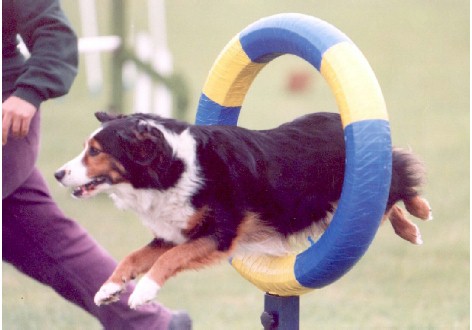
Two pieces of recent research have caught my eye relating to dogs. One relates to their domestication and the other to their ability to recognise human emotions. 

The idea that wolves found scavenging human sites, and some became non-aggressive, to the point of eventual domestication seems even more likely when it is realised that wolves seem to be developing a similar friendly relationship with geleda monkeys.

The fact that we share emotions with dogs and there can be recognised both way across species suggests a kind of symbiotic relationship. Another factor which suggests a similarity between dog and human brains is the extent that dogs can be taught to carry out a range of useful activities. Because they do not have anything like human language wolves are limited in what they can teach their young. But humans have evolved to be very good teachers of human children - and dogs respond when positively taught in the same way.

Saturday, 23 January 2016

What explains the Rise of Humans

Why is language so important when discussing the reasons why humans are different to chimpanzees? This TED talk suggests that the difference is because we can work together in large groups by mutually agreeing fictional stories about the world. I like it and I think you will too.

Tuesday, 19 January 2016

To Live and Die for the Table

I have recently been involved in discussions about nature and the environment which drifted into the treatment of farm animals.  In 1990 I wrote a piece for the New Scientist called "To live, and die, for the table" and for many years it was on the open pages of the New Scientist as an example of the kinds of controversial article that appeared in its opinion pages. When I came to link to it I found that copy had been removed  - so here is a copy of the original page.


Friday, 8 January 2016

Evolution, human intelligence & religiously inspired killings


The recent "Question of the Week" on the Richard Dawkins Foundation Web Site asked the question

“Is there an evolutionary explanation as to why some groups seem more particularly prone to take life and give their own lives in defense of their religion?”

I submitted the following response, in line with the evolutionary model of human intelligence I am developing on this blog.

Thursday, 24 December 2015

Hoping for a Merry Christmas and a Happier New Year for Everyone

Click on Flag for other Christmas related  photographs from Tring
Enjoy your Christmas but never forget that there are many other people who have fallen on hard times and find themselves trapped in situations which, in many cases, was completely out of their control.

In England the growth of food bank, illustrated by this picture of a very large box of donated food in our local supermarket, is just one tiny aspect of a much wider problem.

In effect we are all trapped by global events, such as climate change and war and where many individual feel powerless to act. If we all decided to work for a happier New Year for our fellow men, rather than trying to grab more of the dwindling resources for ourselves, the world might become a better place for everyone.

Sunday, 22 November 2015

Paradigms Lost

Feathered T Rex
I have just read a most interesting article from aeon, with the title "Paradigms lost" by David P Barash. It is well worth reading.
It starts by saying
"Science is not a 'body of knowledge' ... it's a dynamic, ongoing reconfiguration of knowkedge and must be free to change"
I found this most interesting in view of the difficulties I have had it trying to explain way my research in CODIL represents a paradigm shift - and can be related to a possible model of human intelligence.

Tuesday, 10 November 2015

The Mind is Flat


I have just started a FutureLearn course called "The Mind is Flat: The Shocking Shallowness of Human Psychology" and I strongly recommend it if you want to meet some challenging ideas about how the mind works. The course is free and only started yesterday so there is plenty of time to join in.

I find the shallow model of the mind fits in very well with what I have been trying to do on this blog and if you decide to do the course I have made quite a number of comments - some of which I may repeat here. However my current thoughts are to rethink my current "ripples on the surface of an ocean of memories" model of the short term memory and write up an improved version as a result of the ideas that this course is stimulating.

Monday, 28 September 2015

Destroy all Computers and save Humanity

I recently decided to try a FutureLearn course "Introduction to Journalism." This includes a developing story which clearly involves some kind of evil disruption of the worlds computers. One of the exercises was to write a letter to a newspaper and I decided to write a letter as if from a conspiracy theorist who was a Luddite with strong communist leanings. I feel the result may cause some amusement to readers of this blog.

To the Editor, Conspiracy Theory News
Sir
Dr Jones fails to understand the real cause of the recent disruption – but because he works in a Department of Cybercrime I assume he must be a criminal.
As the president of the Modern Luddite Society I can confidently tell you that all computers are inherently evil. They are built by capitalists to exploit the Common Man.
For instance when the current crisis started the power went off and I lost everything in my deep freezer and had to go to Mr Tesco’s shop to get more. This has now happened four times and money-grabbing Mr. Tesco is clearly using his computers to boost sales at my expense.
However the person we should blame for all these problems is Mr Turing. He invented the first computer to spy on Germans during the 2nd World War – his work at Bletchley Park even involved using a “Bombe.”
He then invented the “Turing Test” to be able to measure how good his computer was at fooling people. Then, with the help of Von Neumann, he put his invention in a black box so complex that no-one can understand how it works. This makes deceiving ordinary people much easier to do.
Then that spider-like Tim Berners-Lea got us all tangled in the world-wide web, which gathers information about every one of us. This means that, for instance, that profiteers can bombard me with messages to buy more tins of spam.
At the same time people who clearly hate humanity use computers to spread lethal viruses. I know this for a fact as my Aunt Mary died when she caught one.
Even the Bank of England has exploited their evil computer by getting it to add zeros to the number at the end of their own bank statement. They call it “financial easing” but really it is like printing forged bank notes as it reduces the value of the meagre amount of money the poor have earned by genuine hard work.
Surely the answer to the current crisis is obvious. Join me at Parliament Square on Sunday for a Grand Computer Burning Fiesta and see the devilish machines go up in flames. Perhaps Dr Jones would like to join me. This will be a sure way to persuade our Government to pass a bill banning all computers.