On the FutureLearn site there's a course
(New South Wales is a source I endorse)
It's environmental
With humanities (gentle)
Put over with plenty of force.
I have recently been doing a number of FutureLearn courses, as they encourage me to think outside the box and the current one is on Environmental Humanities, put on by the University of New South Wales. As scientist with little formal training in the humanities I have found the discussion so far interesting- and the comments between the students on the course stimulating.
We are all trapped on a planet where the climate is changing and part of the course involved students suggesting a task area and relating it to the discussions. I though about how, through this blog, I could introduce more environmental posts to alert people of the issues by linking simple poetry to a topic - by resurrecting my limerick posts - although I do not promise one a week, which was the original idea.

Wednesday, 3 February 2016


Were there significant differences between Neanderthals and us?
Adam Benton, on Evoanth recently posted an interesting article "How similar were Neanderthals and humans?" which looked at the evidence and while there are definite differences it is not clear how significant they are -in deciding why they became extinct and we did not.
I responded:
I responded:
It might be worth thinking about later
encounters – when the Europeans discovered America and Australia. The Europeans
came off best because they had the stronger cultural communal knowledge base, which
enabled them to build more powerful weapons. It might be a complete accident of
history that the discovery of how to make iron happened on one side of the
Atlantic rather than the other.
Could we have done better than the
Neanderthals because we had a better cultural knowledge base which gave us more
advanced technology and allowed us to work together in larger groups, perhaps
with some people beginning to take on specialist roles. At the time that language
was first appearing the key to having a better cultural knowledge base would be
having a more powerful language. Thus it may be that when modern humans first
met with Neanderthals we collectively “knew more” – so we came off best – just as
Europeans came off better in America and Australia – because they had better
technology.
If we look at language as a self-modifying
tool there were almost certainly some key “inventions” – such as being able to
differentiate between the past, present and future, counting, etc. Perhaps it was just an accident of history
that one of our species, rather than a Neanderthal, made the first key
technical advances which allowed language to develop and that Neanderthal
brains were just as capable in that respect as our own.
Wednesday, 27 January 2016
Dogs have owners - Cats have staff
Lesley mentioned seeing a T shirt that summarised the position nicely and I have tracked down where it may be purchased.
 |
| For sale |
Tuesday, 26 January 2016
Direct Computer Links with the Brain
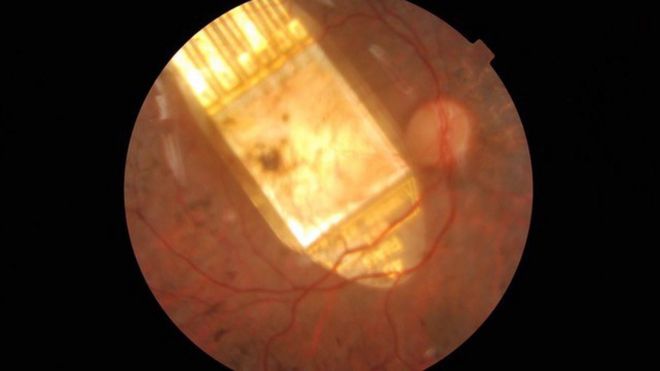 |
| Bionic implant in the eye |
The problem is that the interfaces are crude and it would seem that they work a bit like braille. For instance the brain interface uses the word "communicate" in quotes and describes the process thus:
Up to 100 implants or “channels,” each connected to tens of thousands of neurons, are able to record and encode information that a computer can recognize as representing specific neurological activity. However, this data is full of “noise,” and is frequently inaccurate.
It would seem that both it and the optical chip have a grid of active spots and leave the brain to interpret them. in the same way that the sense cells in the tips of the fingers can interpret the bumps of the braille and transfer the dot pattern to the brain to interpret them. This is a mechanism which clearly works whether or not you actually understand how the brain codes information internally.
Monday, 25 January 2016
Humans, dogs and intelligence
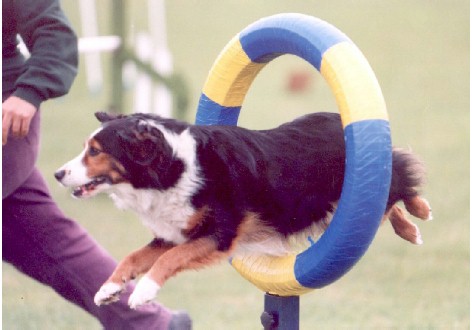
Two pieces of recent research have caught my eye relating to dogs. One relates to their domestication and the other to their ability to recognise human emotions.
The idea that wolves found scavenging human sites, and some became non-aggressive, to the point of eventual domestication seems even more likely when it is realised that wolves seem to be developing a similar friendly relationship with geleda monkeys.
The fact that we share emotions with dogs and there can be recognised both way across species suggests a kind of symbiotic relationship. Another factor which suggests a similarity between dog and human brains is the extent that dogs can be taught to carry out a range of useful activities. Because they do not have anything like human language wolves are limited in what they can teach their young. But humans have evolved to be very good teachers of human children - and dogs respond when positively taught in the same way.
Saturday, 23 January 2016
What explains the Rise of Humans
Why is language so important when discussing the reasons why humans are different to chimpanzees? This TED talk suggests that the difference is because we can work together in large groups by mutually agreeing fictional stories about the world. I like it and I think you will too.
Tuesday, 19 January 2016
To Live and Die for the Table
I have recently been involved in discussions about nature and the environment which drifted into the treatment of farm animals. In 1990 I wrote a piece for the New Scientist called "To live, and die, for the table" and for many years it was on the open pages of the New Scientist as an example of the kinds of controversial article that appeared in its opinion pages. When I came to link to it I found that copy had been removed - so here is a copy of the original page.

Friday, 8 January 2016
Evolution, human intelligence & religiously inspired killings
The recent "Question of the Week" on the Richard Dawkins Foundation Web Site asked the question
“Is there an evolutionary explanation as to why some groups seem more particularly prone to take life and give their own lives in defense of their religion?”
I submitted the following response, in line with the evolutionary model of human intelligence I am developing on this blog.
Subscribe to:
Posts (Atom)